
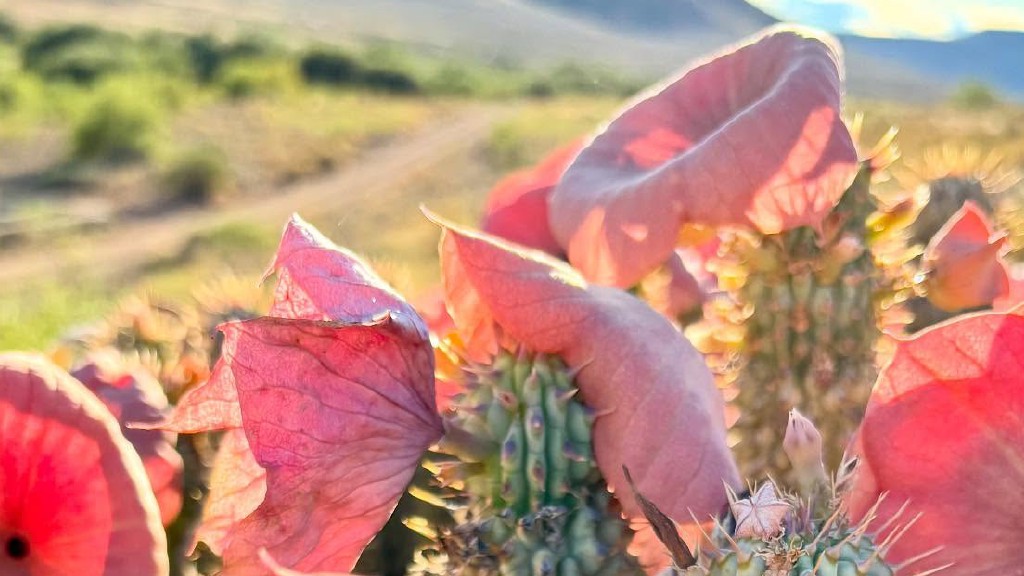
The Hoodia Story at Enjo Nature Farm
WE DID NOT set out to become custodians of botanical infamy. We had purchased a guest farm, a slice of the centre of the the Biedouw Valley, in the succulent karoo - that remarkable biodiversity hotspot where nature seems to have conducted her most inventive experiments with drought-resistant flora.
Among the indigenous residents we inherited was Hoodia gordonii, a fascinating succulent that would prove to have connections far beyond our remote corner of the Western Cape. Little did we know that our new property came complete with cultivated fields of what had once been the internet’s most notorious plant celebrity.
Back in those days – the early 2000s – there was no box labelled “spam filter sophisticated enough to stop Hoodia.” Email inboxes worldwide groaned under the weight of subject lines proclaiming miraculous fat-melting properties of an ancient desert secret. The humble succulent, traditionally used by the San people as an appetite suppressant, had somehow transformed into the star of a global digital gold rush.

Hoodia spam email from 2006
The Serendipitous Inheritance
But then we were given a sign. When we walked the property for the first time, we discovered not just the natural Hoodia populations scattered across the hillsides – which belonged there as surely as the fynbos and the granite outcrops – but the remnants of what had once been cultivated fields along the Biedouw River. Derelict rows of the distinctive cactus-like stems, already breaking formation and returning to wild disorder, testament to someone’s abandoned commercial dreams.
The previous owners, it transpired, had been among those forward-thinking (or perhaps deliriously optimistic) Western Cape growers who’d caught Hoodia fever during the height of the spam email phenomenon. When South Africa’s Council for Scientific and Industrial Research had identified and patented P57 – Hoodia’s active compound – commercial partnerships with Phytopharm, Pfizer, and later Unilever followed. Suddenly, every entrepreneur with access to arid land was dreaming of succulent fortunes.
The Road Less Spammed
Call it serendipity, but the day those Hoodia fields were planted in the Biedouw Valley, the cultivator had chosen perhaps the most appropriate location possible. Unlike the overseas markets clamoring for miracle weight-loss solutions, this was actually within the plant’s natural range – the succulent karoo where Hoodia had been quietly perfecting its survival strategies for millennia.
The harvest of what promised to be a lucrative botanical venture: it was definitely a road less travelled, although considerably less fun was had when Unilever abandoned its $400 million development program by 2008 due to safety concerns. The bubble burst as dramatically as it had inflated, leaving behind fields of abandoned succulents to fend for themselves.
But here’s where the story takes an interesting turn. The abandoned Hoodia didn’t simply survive neglect – it began to thrive in its own chaotic way. For years, visitors to Enjo Nature Farm were treated to the unusual sight of these semi-wild plants with their distinctive crown-shaped flowers, both in their natural habitat and in the increasingly disheveled riverside plots where cultivation lines had long since dissolved into natural randomness. Nature, it seemed, was perfectly capable of managing the transition from commercial crop back to wild resident – and was doing so with considerable enthusiasm.
Nature’s Editorial Decision
The Biedouw Valley, while hospitable to Hoodia, still reserves the right to make its own publishing decisions. The flood of winter 2023 didn’t spare the already half-wild riverside cultivation – the waters rose and most of the plants were swept away, nature’s way of editing out what had perhaps always been an ambitious overreach gradually returning to the wild anyway.
When the waters receded, we managed to rescue a handful of specimens. Today, just one survivor remains, donated to the Clanwilliam Wildflower Show where it may grace annual displays in years to come – a living reminder of the day the internet discovered the succulent karoo, however briefly and improbably.
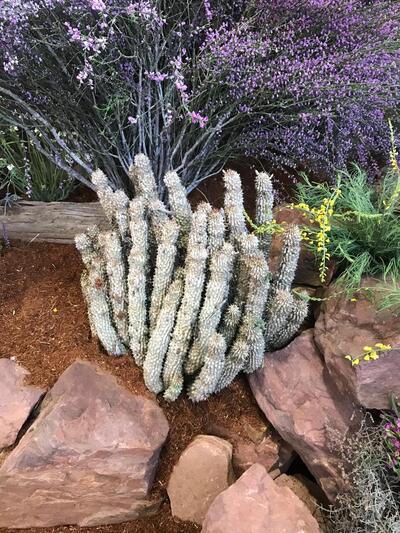
Hoodia from Enjo Nature Farm at the Clanwilliam Flower Show 2024
The Writer’s Postscript
Sometimes the stories just come to you through property deeds and Instagram posts about flowering succulents. Other times you have to dig through spam email history and botanical patents to understand what you’re looking at. It’s a mysterious process, this intersection of global trends with local biodiversity, but one hopes never to lose the capacity for surprise at finding internet history literally taking root in one’s backyard.
As the current custodians of Enjo Nature Farm we continue to protect and nurture our piece of the succulent karoo, the remaining natural Hoodia populations serve as a reminder: long after the last spam email fades from deleted folders, the plants that inspired the frenzy will still be here, quietly demonstrating the art of survival in one of the world’s most remarkable biomes.
And if you ever receive an email promising miraculous weight loss from an ancient desert secret, you’ll know it was inspired by a plant so robust that entire industries were built around it – yet so delicate that a decent Biedouw Valley flood could wipe out years of commercial cultivation in a single night.
Comments